
Challenges in creating pedagogical materials for the industrial environment
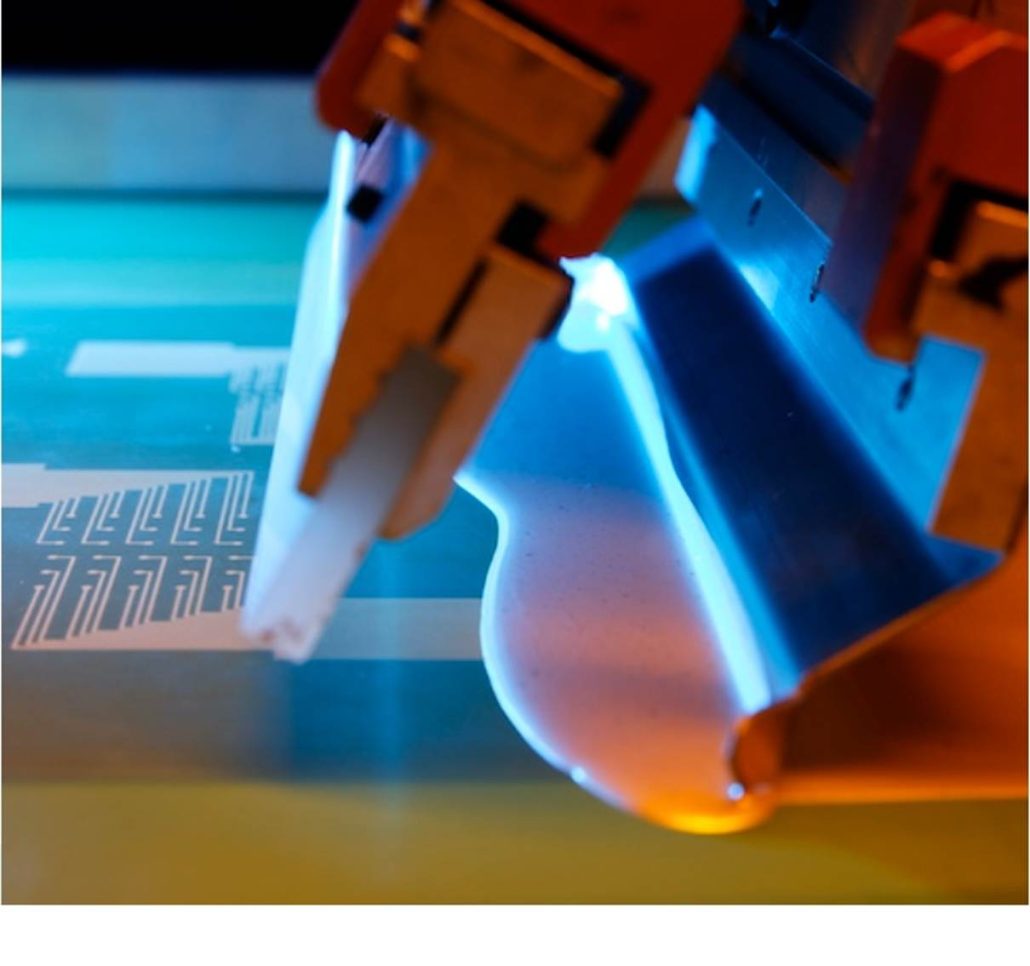
Industry 4.0 is transforming manufacturing — and training must keep pace. We explore the challenges of designing pedagogical materials for industrial operators: from knowledge gaps and time constraints, to language barriers and resistance to new technologies.
Innovative training materials — IoT integrated into composite material manufacturing

IoT is reshaping composite manufacturing — but are engineers ready? We look at new training materials designed to bridge the gap between telecommunications and mechanical engineering students, using real-world industrial applications as the learning context.
What gap analysis reveals — operators’ needs in the Industry 4.0 era
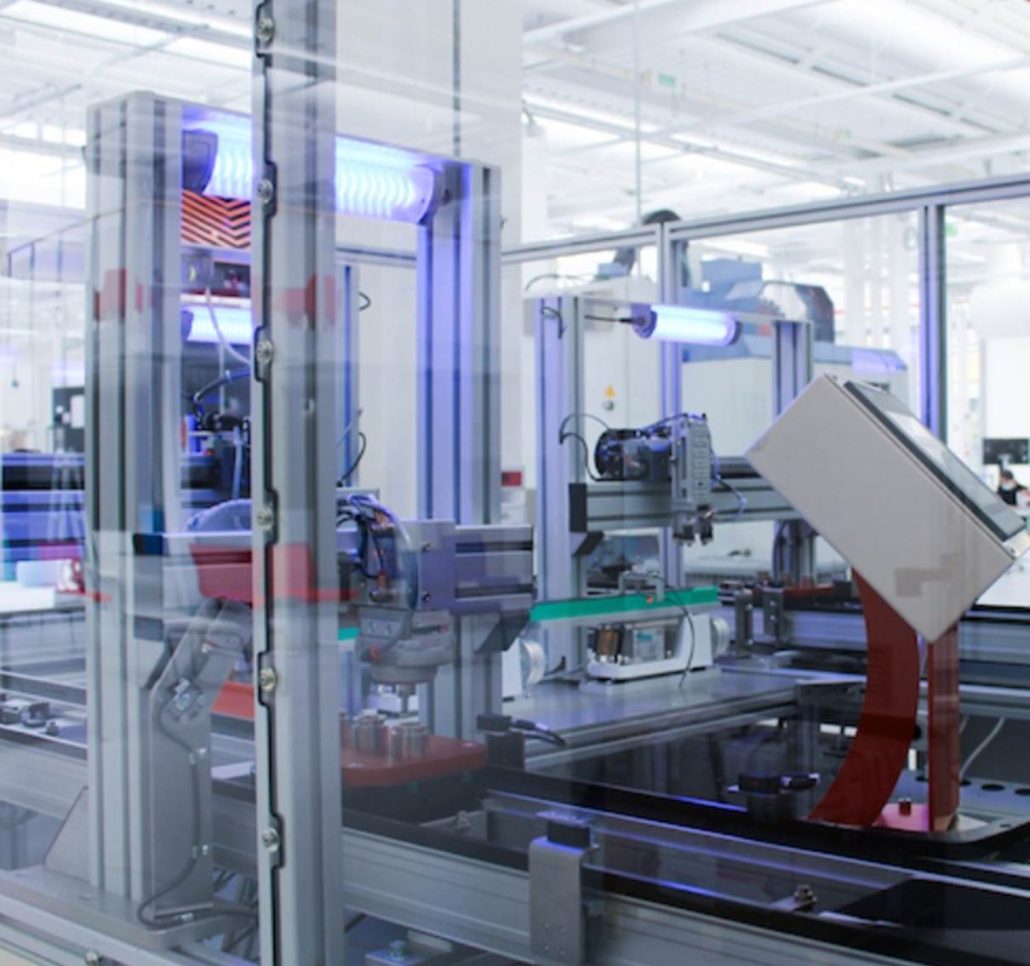
Gap analysis is a powerful tool for industrial transition. We examine what it reveals about operators’ skill needs as manufacturers move from machine automation to connected, data-driven systems — and why training design must follow.
Co-Creation Session on Circular Business Models for the Textile Industry under Horizon Europe

On 15 May, 2025, a co-creation session brought together representatives from Savonia, MUE, MGEP, ESTIA and Zabala to collaboratively explore a Horizon Europe call focused on circular business models in the textile industry. The session began with a warm-up exchange aimed at presenting the research teams and their respective approaches, followed by a joint working session to integrate knowledge and develop concrete ideas. Although the exercise did not result in a project proposal, it fostered
ESTABLISHING LOGISTICS START-UP COMPANIES: THE ROLE OF INSTITUTIONS

The article examines the macroeconomic role of institutions in encouraging logistics start-up companies in the transportation and warehousing sector. It assumes start-ups succeed better in countries with high-quality institutional systems. Using comparative analysis and econometric models, the study compares statistical data of EU member states, integrating indices like the World Governance Indicator and Human Development Index to demonstrate the crucial role of institutions in fostering successful logistics ventures.
Modeling The Dynamics Of Digital Skills Development In Hungary And The EU: A Markov Chain Approach

This paper models digital skills dynamics in Hungary and the EU using Markov Chains, a novel method for tracking skill level transitions. Based on the 2017–2022 DESI data, the study highlights significant disparities between Hungary and the EU in ICT training and specialization. The analysis provides policymakers with essential insights into skill gaps, aiding the development of concrete actions to support Hungary’s digital transformation and future workforce strategies.
KUT-SAVONIA Coil Project in Language Learning (March 2025)

This Collaborative Online International Learning (COIL) project between KUT and Savonia aimed to enhance students’ language skills and teamwork in an international environment. Participants joined online meetings and collaborated in smaller groups. Their final task was to create audio or video presentations on logistics-related topics, such as automation and international team management, fostering cross-cultural competence and knowledge exchange.
Publication “Digital Skills in the Future of Work”
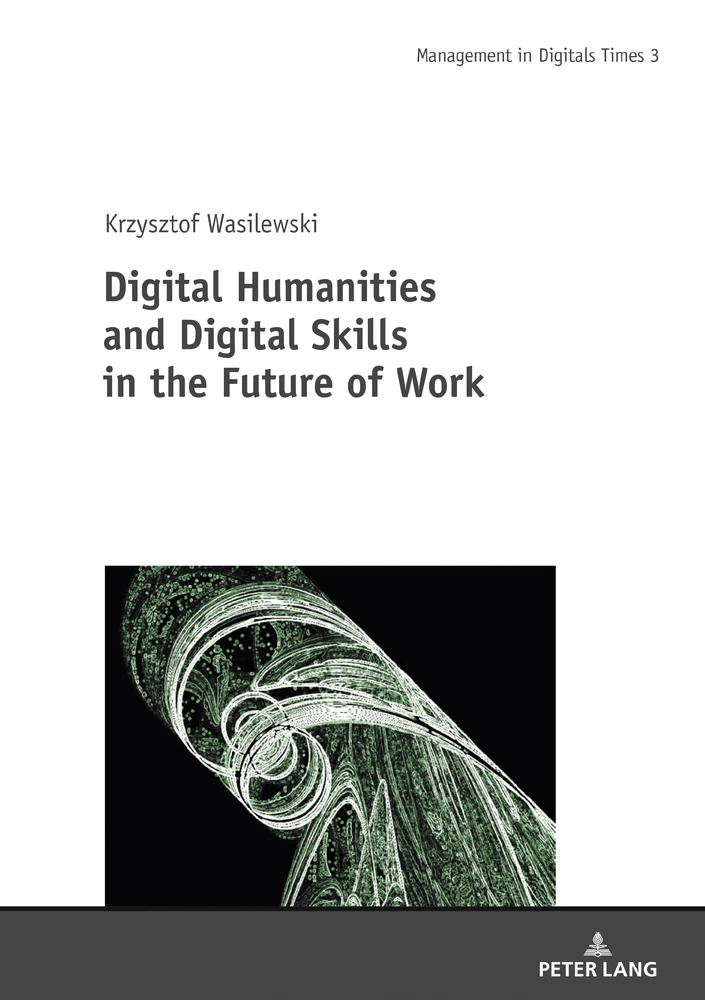
The publication “Digital Humanities and Digital Skills in the Future of Work” explores the evolving role of digital humanities in shaping future workplaces. Contributed by scholars from EU4Dual and Ukrainian institutions, the volume examines how digital skills and technologies like AI and Industry 4.0 influence science, labor, and cultural heritage. Emphasizing applied and collaborative research, it offers insights into the practical integration of digital humanities in education and industry, addressing key future work trends.
Conference “Digital Skills in the Future of Work” (June 2024)
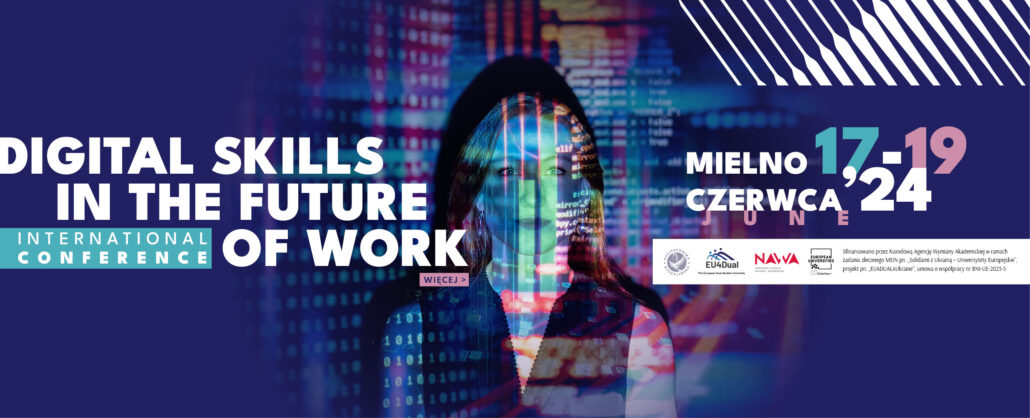
The conference focused on EU4Dual’s priorities, aiming to exchange knowledge and enhance cooperation between EU4Dual and Ukrainian universities under the EU4DUAL4Ukraine project. It addressed the Future of Work, digital skills, and the role of AI in dual education. The event included contributions from European partners and businesses, presented preliminary research results, and hosted the first Grand Challenges Forum, fostering dynamic, transnational dialogue.
Future of Work – Future of Education” (June 2023)
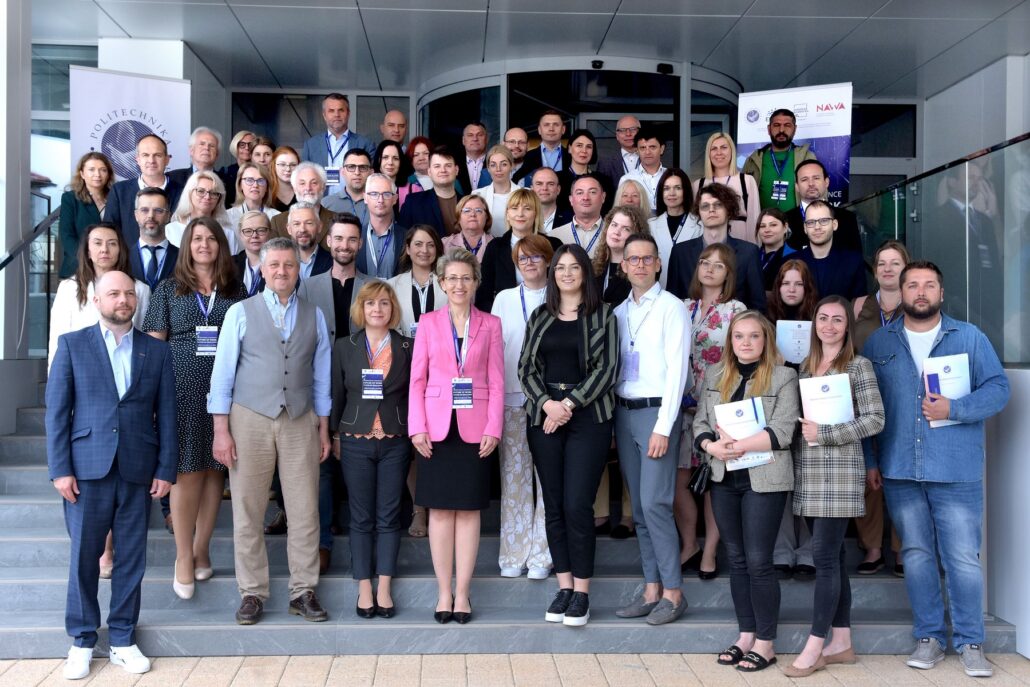
The international conference “Future of Work – Future of Education” took place in June 2023, focusing on dual education, intercultural communication, and cooperation between academia and industry. Participants presented research on the future of work and education, engaging in debates with entrepreneurs. Representatives from various European universities joined discussions to assess the initiative’s progress, creating a dynamic platform for knowledge exchange and international partnerships.