
BLUE POINT
The BLUEPOINT project tackles marine plastic waste by establishing a replicable Blue Circular Economy model in the Atlantic region. It aims to create a multi-stakeholder ecosystem of innovation and entrepreneurship, focusing on developing marketable solutions for glocalization, recovery, and processing of marine plastic. The goal is to reduce environmental impact and accelerate over 25 venturing initiatives to create new, sustainable businesses.
Revolutionizing Workplace Safety: Collaborative Robots Empower Workers with Disabilities
Mondragon Unibertsitatea researchers participated in a project combining robotics and AI to improve safety for workers with disabilities. Their focus was a refrigerator dismantling process, previously risking muscle strain. The team developed a robot-human collaborative system using AI vision to handle the magnetic seal removal. A real-time monitoring system, tested via reinforcement learning in a simulation environment, ensures worker safety and efficient coordination in the new process.
Adapting Knowledge to Changing Roles: EZATECH Supports Employee Development
Mondragon Unibertsitatea participates in the EZATECH project, which addresses the need for employees to acquire new skills as their roles evolve. The project created a 7-phase knowledge management framework supported by a technological platform. This tool tracks employee knowledge evolution, detects skill gaps, and identifies growth opportunities, helping organizations align training with strategic goals. Applied successfully in industry and education, EZATECH effectively supports employee development.
Staff Week on Sustainability and Well-Being in the Workplace
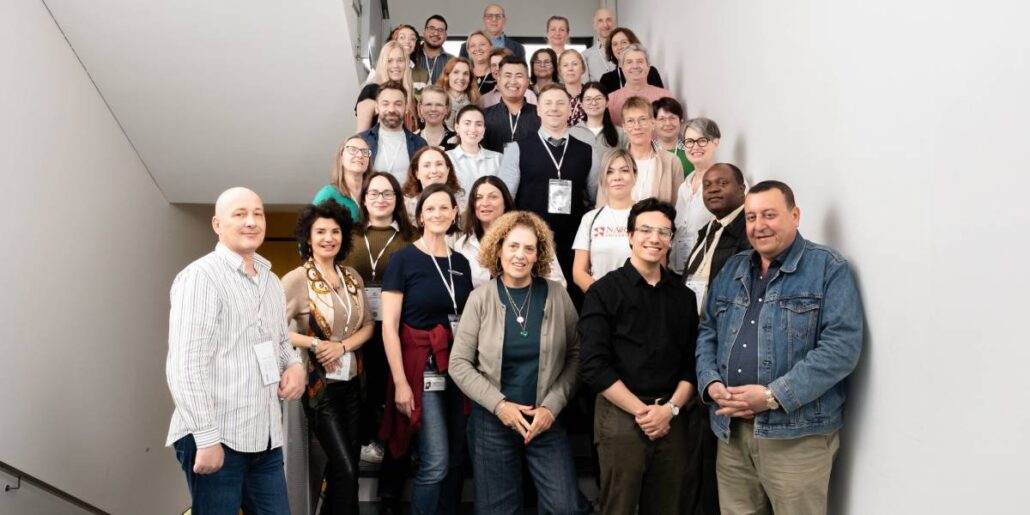
FH JOANNEUM’s 2025 Staff Week on Sustainability and Well-Being in the Workplace hosted 31 participants from 17 countries. The event, opened by Birgit Hernády and Bernadette Triebl-Wurzinger, featured sustainability discussions and a sustainable Graz city tour, alongside well-being sessions, including movement and meditation. Participants also visited the Bad Gleichenberg campus and the Zotter Chocolate Factory to learn about sustainable production. It fostered valuable insights for creating healthy, sustainable workplaces.
Digital humanities and digital skills in the future of work

This publication explores how digital humanities is shaping future workplaces. Written by academics from EU4Dual and Ukrainian institutions, the book examines how digital skills and technologies like artificial intelligence and Industry 4.0 affect science, work and cultural heritage. Focusing on practical and collaborative research, it provides insights into using digital humanities in education and industry.
Empowering students through collaborative Innovation and real-world problem solving
MCAST students took part in a 24-hour innovation challenge. They worked with students from nine universities to solve real sustainability problems. This hands-on experience encouraged creativity, teamwork and problem-solving under pressure. MCAST participants said the challenge was the best part of the event, with several teams winning awards. The project helped them understand sustainable business practices and prepared them for future global challenges.
Sustainable growth for international SMEs
How can businesses expand into international markets in a sustainable way? In March 2025, Savonia UAS welcomed students from the Netherlands and Germany (DHBW) for an international Erasmus+ BIP (Blended Intensive Programme) week. Working alongside Savonia students, the international students spent a week in groups developing complete sales processes from an environmental, social and governance perspective. They focused on sustainable international growth and created practical roadmaps to help their client companies enter the Central European
Empowering cross-border entrepreneurship

Savonia University of Applied Sciences has teamed up with ESTIA (France) and other EU4DUAL alliance members to create a new entrepreneurship mobility programme. This programme helps students start businesses across borders whilst continuing their studies. The pilot programme, which includes French student Romane Forment, shows how well it works in developing business skills and encouraging international partnerships. By combining work-based learning with entrepreneurship education, Savonia is leading the way in creating forward-thinking, innovation-focused higher education.