
Future of Work – Future of Education” (June 2023)
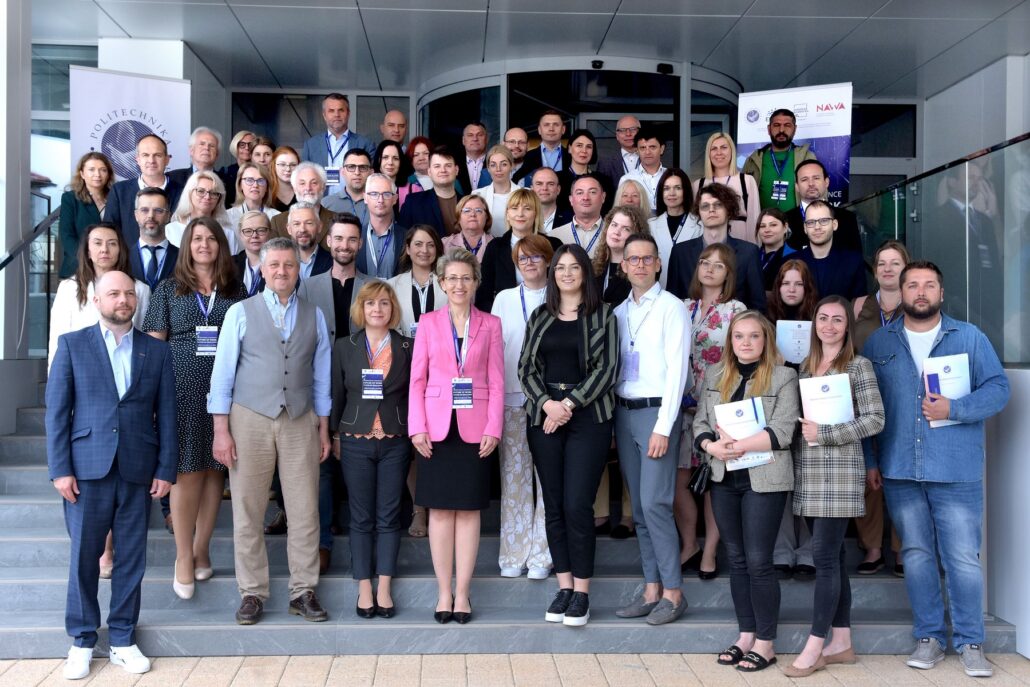
The international conference “Future of Work – Future of Education” took place in June 2023, focusing on dual education, intercultural communication, and cooperation between academia and industry. Participants presented research on the future of work and education, engaging in debates with entrepreneurs. Representatives from various European universities joined discussions to assess the initiative’s progress, creating a dynamic platform for knowledge exchange and international partnerships.
Preventing Cognitive Decline Through Healthy Habits and Nutrition

The CITA GO-ON study, in which Mondragon Unibertsitatea participates, aims to prevent cognitive decline in over 1,000 older adults by promoting healthy habits, cardiovascular health, and cognitive stimulation. The two-year project features interventions like physical activity and emotional training, with a strong focus on nutrition. Nutritional workshops, led by BCC Innovation, teach participants about brain-healthy foods and cooking techniques to support long-term cognitive function.
Revolutionizing Workplace Safety: Collaborative Robots Empower Workers with Disabilities
Mondragon Unibertsitatea researchers participated in a project combining robotics and AI to improve safety for workers with disabilities. Their focus was a refrigerator dismantling process, previously risking muscle strain. The team developed a robot-human collaborative system using AI vision to handle the magnetic seal removal. A real-time monitoring system, tested via reinforcement learning in a simulation environment, ensures worker safety and efficient coordination in the new process.
Adapting Knowledge to Changing Roles: EZATECH Supports Employee Development
Mondragon Unibertsitatea participates in the EZATECH project, which addresses the need for employees to acquire new skills as their roles evolve. The project created a 7-phase knowledge management framework supported by a technological platform. This tool tracks employee knowledge evolution, detects skill gaps, and identifies growth opportunities, helping organizations align training with strategic goals. Applied successfully in industry and education, EZATECH effectively supports employee development.
Giving New Life to Wind Turbine Blades Through Innovation and Sustainability

The EU-funded EoLO-HUBs project is developing innovative solutions to efficiently dismantle, recycle, and reuse end-of-life wind turbine blades. The research focuses on improving low-carbon thermal and chemical recycling technologies to recover high-quality materials, like reinforced fibres, for reuse in construction and automotive industries, promoting a circular economy. The project also includes a Knowledge Hub to share best practices and connect experts in sustainable blade management.
Bridging Research and Challenges: Positive Outcomes from the EU4DUAL Conferences
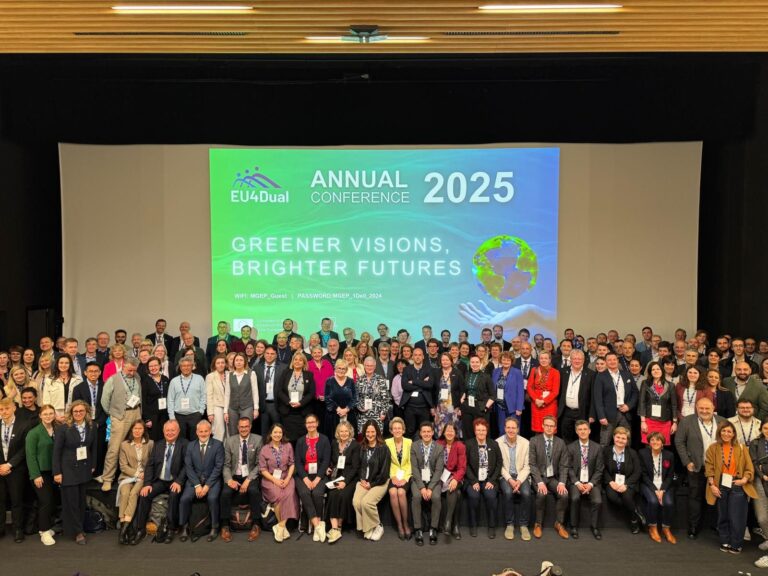
MCAST academics and students actively participated in the EU4DUAL 2024 and 2025 conferences, presenting research and establishing international partnerships. This platform facilitated connections with institutions like Mondragon and Savonia Universities, leading to follow-up discussions on joint projects in social care, circular economy, digital heritage, and engineering. The experience was described as highly enriching, strengthening academic collaboration, sharing innovative practices, and aligning education with global sustainability goals.
Digital humanities and digital skills in the future of work

This publication explores how digital humanities is shaping future workplaces. Written by academics from EU4Dual and Ukrainian institutions, the book examines how digital skills and technologies like artificial intelligence and Industry 4.0 affect science, work and cultural heritage. Focusing on practical and collaborative research, it provides insights into using digital humanities in education and industry.
Giving new life to wind turbine blades through innovation and sustainability
Wind energy is key to a cleaner future, but what happens when wind turbine blades reach the end of their life? The EoLO-HUBs project, funded by the European Union, is developing innovative solutions to dismantle, recycle, and reuse these massive structures in an efficient and sustainable way.
Building Micro-Grid Demonstrator at ESTIA
ESTIA has developed a Smart Building demonstrator at the ESTIA Berri campus featuring 314 photovoltaic panels covering 608m² with 127 kWc production capacity. Launched in 2023, this micro-grid aims to reduce the campus’s energy bill and carbon footprint while serving as an open platform for research in renewable energy integration. The building showcases ESTIA’s EnerGEA technological platform and fosters collaboration with laboratories and industry partners in electrical engineering and renewable energy.