
Co-Creation Session on Circular Business Models for the Textile Industry under Horizon Europe
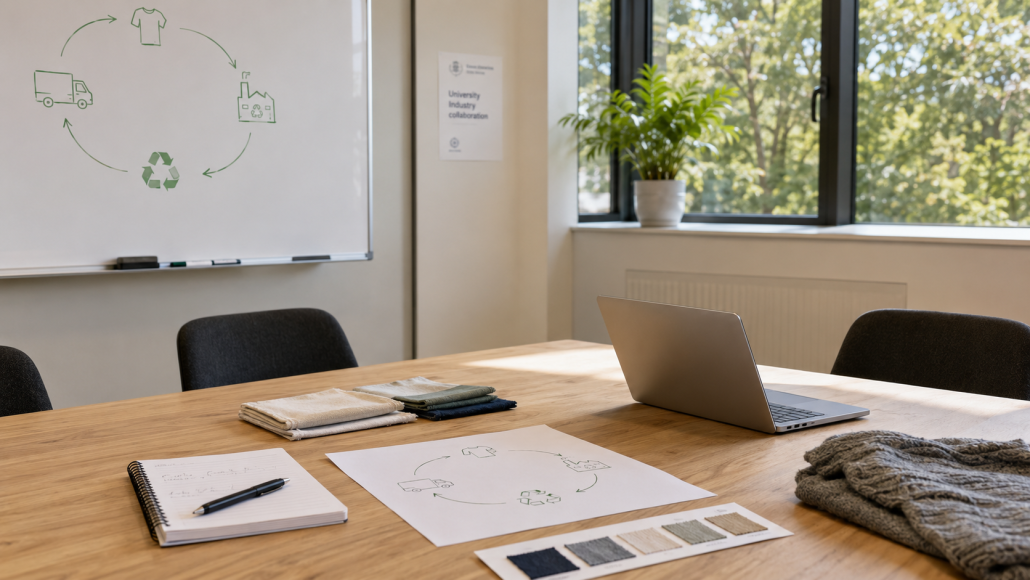
On 15 May, 2025, a co-creation session brought together representatives from Savonia, MUE, MGEP, ESTIA and Zabala to collaboratively explore a Horizon Europe call focused on circular business models in the textile industry. The session began with a warm-up exchange aimed at presenting the research teams and their respective approaches, followed by a joint working session to integrate knowledge and develop concrete ideas. Although the exercise did not result in a project proposal, it fostered
EU4Dual Winter School at Savonia: A Week of Innovation and Collaboration
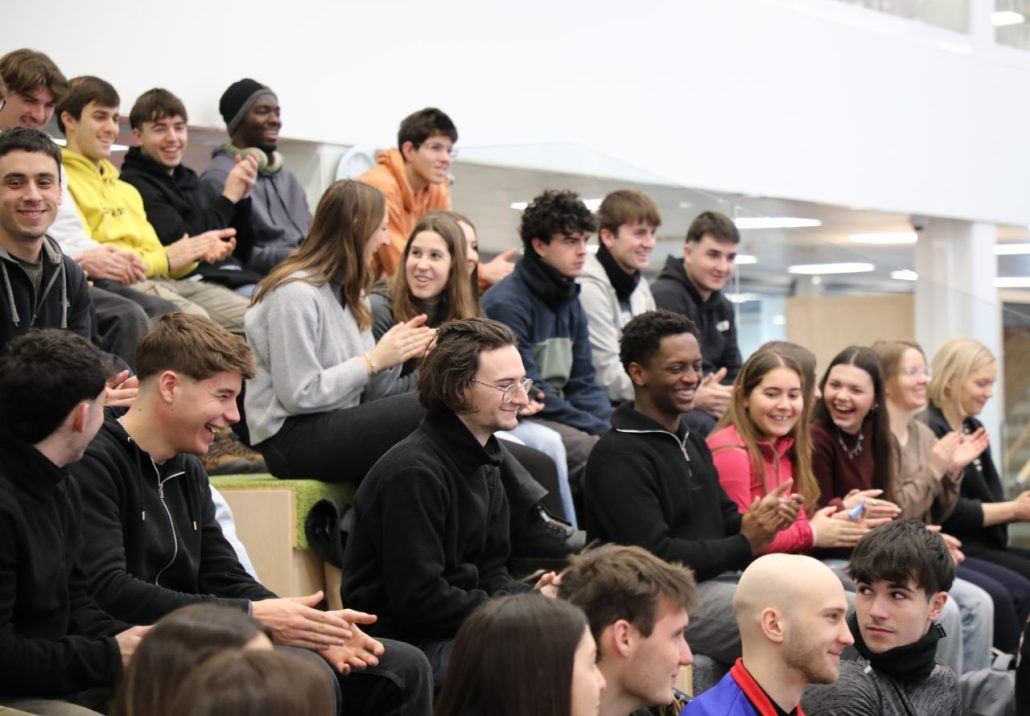
From 23–27 February, MUE students participated in the EU4Dual Winter School at Savonia University of Applied Sciences in Finland, together with ESTIA students and staff. Working in international teams, participants addressed real-life challenges proposed by local experience service companies and progressed through the innovation process from problem identification to concept development. The programme combined workshops, company visits, and expert coaching with activities focused on teamwork, sustainability, and self-leadership, while also discovering Kuopio and Finnish winter
BLUE POINT
The BLUEPOINT project tackles marine plastic waste by establishing a replicable Blue Circular Economy model in the Atlantic region. It aims to create a multi-stakeholder ecosystem of innovation and entrepreneurship, focusing on developing marketable solutions for glocalization, recovery, and processing of marine plastic. The goal is to reduce environmental impact and accelerate over 25 venturing initiatives to create new, sustainable businesses.
MUDUALBA PROJECT VISIT AT MONDRAGON UNIBERTSITATEA
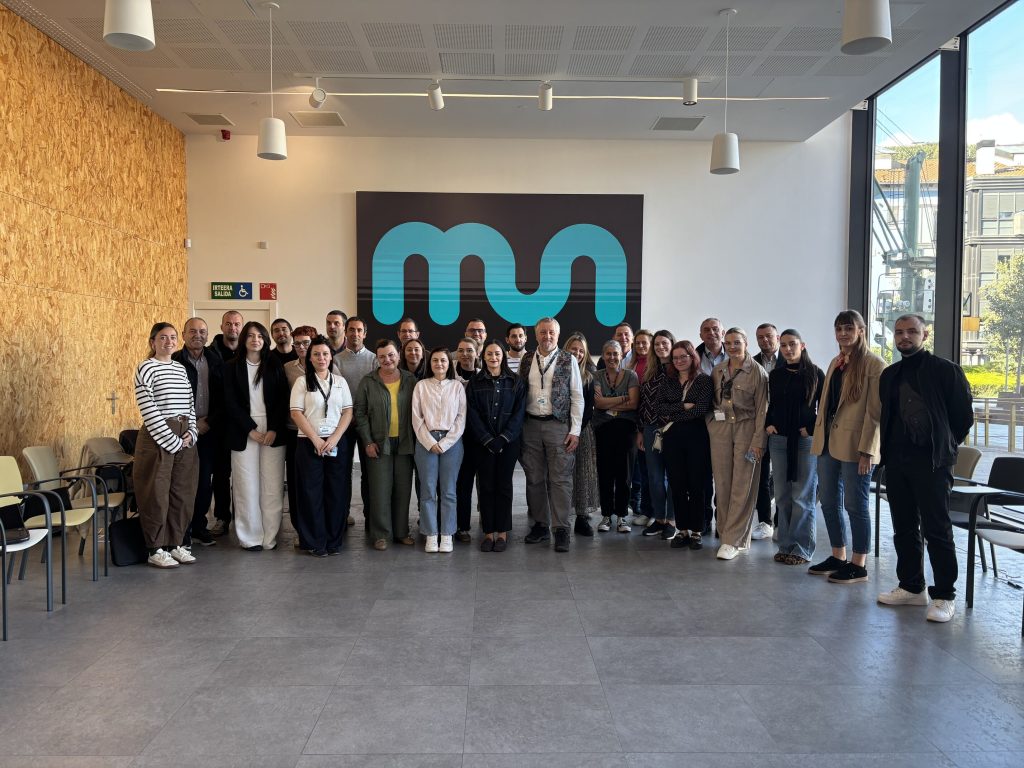
The study visit from the DUALBA project explored how Mondragon Unibertsitatea implements its Dual model. Participants learned about the Dual model, key programs, and faculty experiences through presentations and round tables from the Faculties of Business, Education, Gastronomic Sciences, and Engineering. The visit included a session at Bilbao AS Fabrik and a lecture on the cooperative movement. The experience will help Albanian partners develop their own Dual education model, aided by insights on accreditation.
Preventing Cognitive Decline Through Healthy Habits and Nutrition

The CITA GO-ON study, in which Mondragon Unibertsitatea participates, aims to prevent cognitive decline in over 1,000 older adults by promoting healthy habits, cardiovascular health, and cognitive stimulation. The two-year project features interventions like physical activity and emotional training, with a strong focus on nutrition. Nutritional workshops, led by BCC Innovation, teach participants about brain-healthy foods and cooking techniques to support long-term cognitive function.
Revolutionizing Workplace Safety: Collaborative Robots Empower Workers with Disabilities
Mondragon Unibertsitatea researchers participated in a project combining robotics and AI to improve safety for workers with disabilities. Their focus was a refrigerator dismantling process, previously risking muscle strain. The team developed a robot-human collaborative system using AI vision to handle the magnetic seal removal. A real-time monitoring system, tested via reinforcement learning in a simulation environment, ensures worker safety and efficient coordination in the new process.
Adapting Knowledge to Changing Roles: EZATECH Supports Employee Development
Mondragon Unibertsitatea participates in the EZATECH project, which addresses the need for employees to acquire new skills as their roles evolve. The project created a 7-phase knowledge management framework supported by a technological platform. This tool tracks employee knowledge evolution, detects skill gaps, and identifies growth opportunities, helping organizations align training with strategic goals. Applied successfully in industry and education, EZATECH effectively supports employee development.
Giving New Life to Wind Turbine Blades Through Innovation and Sustainability
The EU-funded EoLO-HUBs project is developing innovative solutions to efficiently dismantle, recycle, and reuse end-of-life wind turbine blades. The research focuses on improving low-carbon thermal and chemical recycling technologies to recover high-quality materials, like reinforced fibres, for reuse in construction and automotive industries, promoting a circular economy. The project also includes a Knowledge Hub to share best practices and connect experts in sustainable blade management.
Giving new life to wind turbine blades through innovation and sustainability

Wind energy is key to a cleaner future, but what happens when wind turbine blades reach the end of their life? The EoLO-HUBs project, funded by the European Union, is developing innovative solutions to dismantle, recycle, and reuse these massive structures in an efficient and sustainable way.